Interlink
Bring machine telemetry, control inputs, operator context, media, communication, scenario state, and environment data into one shared state layer with source metadata intact.
Platform // Shared State Architecture
Machine Nerve is not one dashboard and not one score. It is a modular state layer for turning machine behavior, operator context, environment, communication, agent findings, rules, feedback, and outcomes into replayable performance records.
Performance Record
Machine Nerve structures each session so humans can replay it, AI agents can query it, rules can act on it, and future training loops can learn from it. The interlink comes first: feedback loops, debrief loops, simulator changes, reports, cues, and outcome trends are downstream behaviors of the same evidence-backed record.
Signal Path
Bring machine telemetry, control inputs, operator context, media, communication, scenario state, and environment data into one shared state layer with source metadata intact.
Build a synchronized session record while preserving timing provenance, drift, signal quality, freshness, confidence, and null reasons.
Let humans and data-grounded agents query what the machine did, what the operator did, what the environment demanded, and what changed afterward.
Turn findings into coach notes, engineer flags, instructor evidence, live cues, report items, simulator adaptations, or rule proposals.
Keep manual, AI-assisted, and adaptive paths inside defined guardrails, policy gates, protected phases, source-quality checks, and human review.
Track whether feedback, coaching, scenario changes, or rule adjustments produced measurable behavior, workload, recovery, or performance signals over time.
Architecture Diagrams
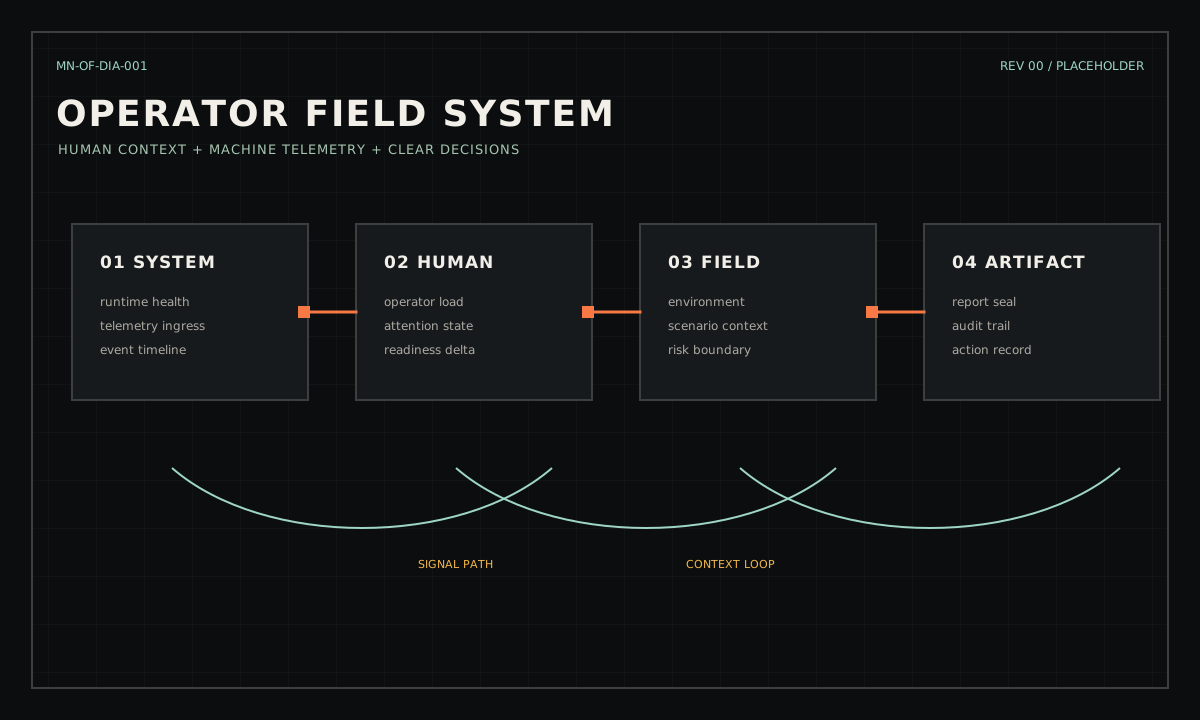
Machine state, operator state, environment, agent findings, rules, feedback, and outcomes share one path.
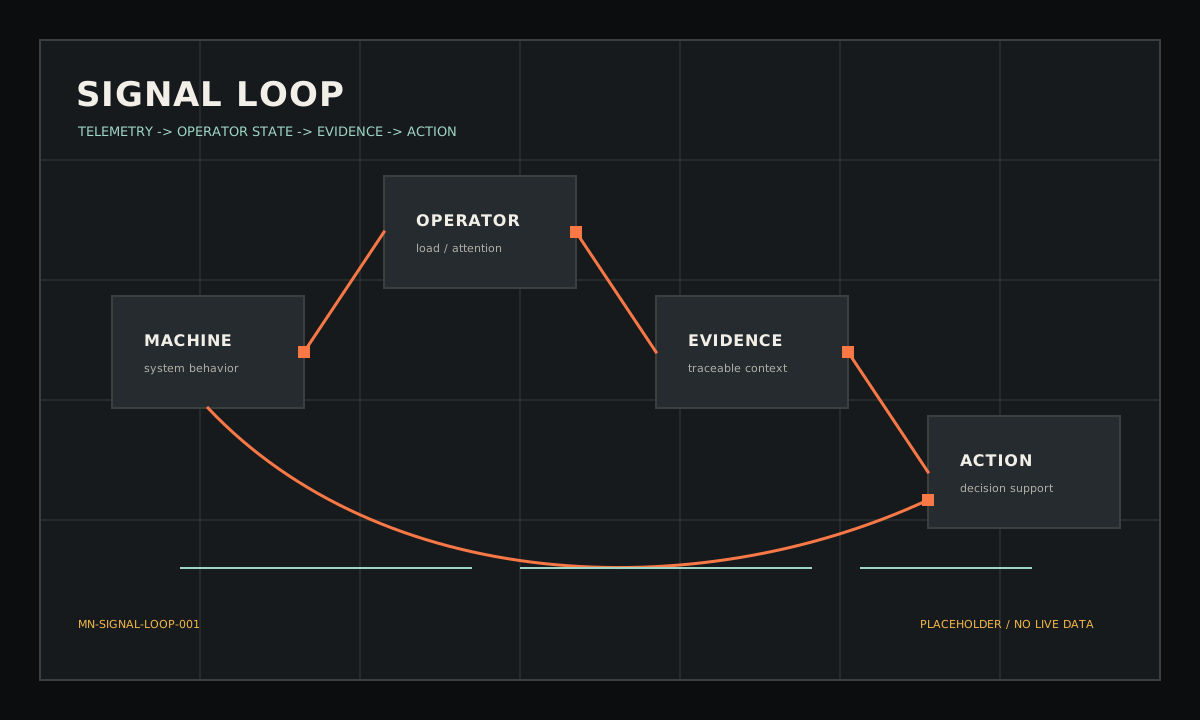
Interlink, record, inspect, route, guard, and measure as a modular platform sequence.
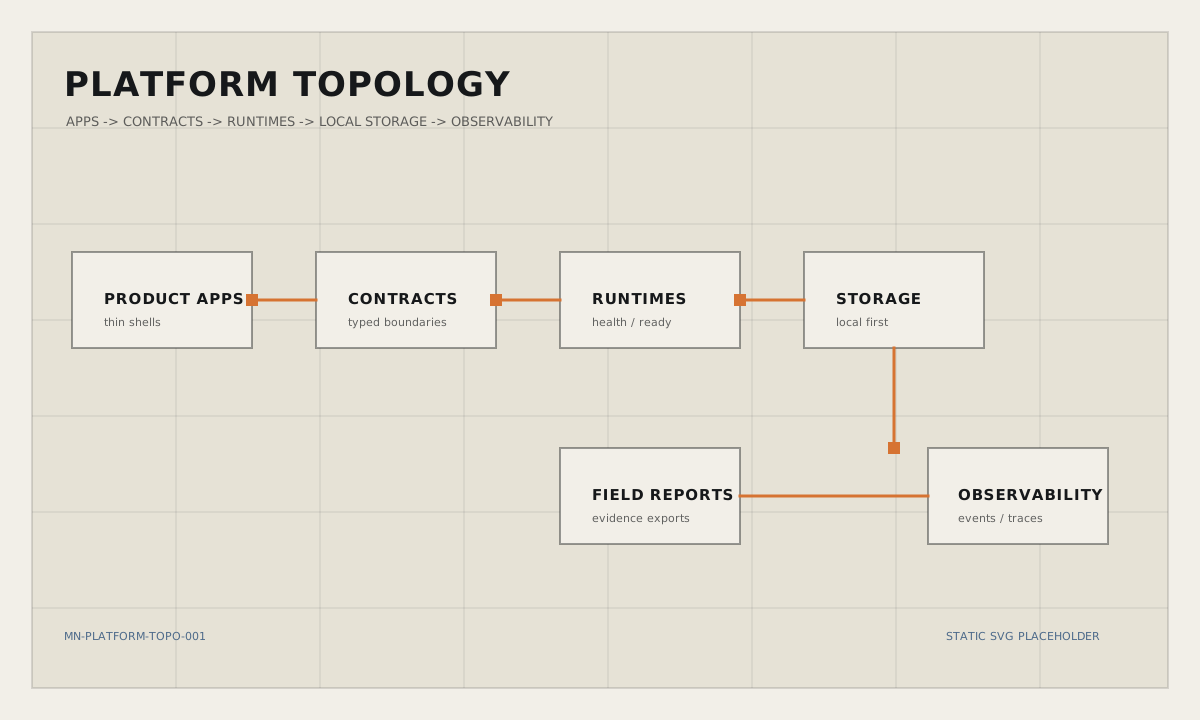
Schemas, generated clients, protocol profiles, durable records, and evidence exports.
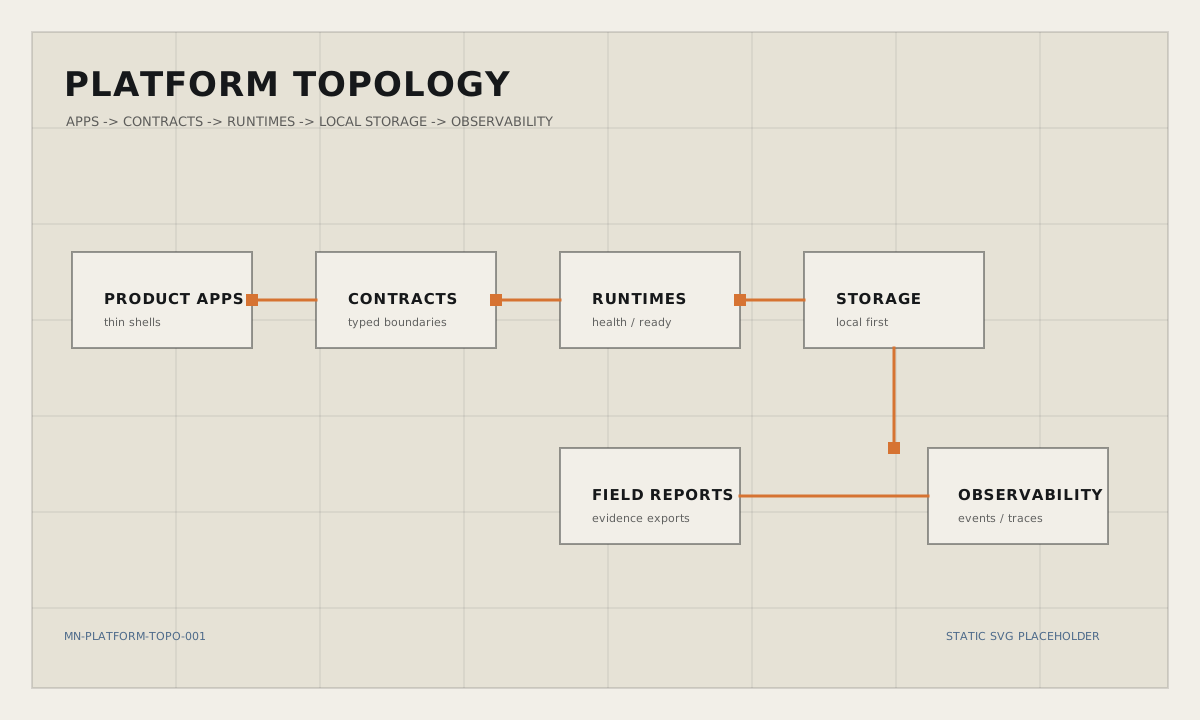
Hot buffers, operational SQLite, analytical DuckDB, and cold artifacts by purpose.
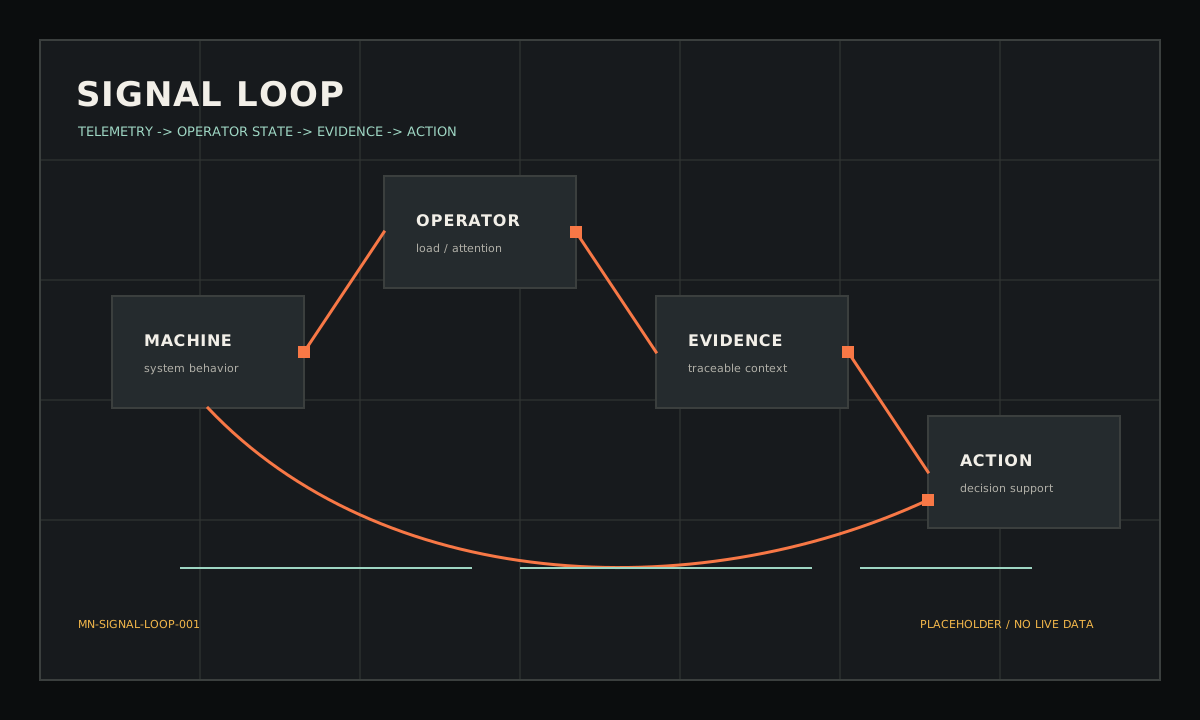
Source quality, freshness, metric frames, rules, feedback, and after-action evidence.
Capabilities
Collect simulator or vehicle telemetry, operator inputs, video, audio-derived events, biometric context, and environment state without flattening their timing differences or source boundaries.
Designed around explicit source, timestamp, quality, and fidelity metadata before data becomes a finding, cue, rule, or recommendation.Align dense, multi-rate streams into a reviewable timeline while preserving uncertainty, drift, confidence, and source boundaries.
Review surfaces can show when a signal is strong, weak, delayed, missing, or unsuitable for a claim.Treat biometrics, neurophysiological research paths, behavioral markers, and workload signals as performance context rather than clinical interpretation.
Claim boundaries keep operator-context language tied to training, review, and research use cases.Connect outcomes to source traces, session segments, replay points, feedback history, exports, and after-action artifacts.
Teams can move from summary to raw evidence instead of trusting opaque scores.Use AI to query records, draft, organize, and explain while keeping decisions bounded by schema validation, evidence links, and human review.
High-consequence flows avoid autonomous action claims and keep human operators in the loop.Use typed contracts, local-first records, analytical bundles, and versioned evidence surfaces across product shells and deployment postures.
The public architecture is backed by a multi-product monorepo with 90+ typed contract artifacts and explicit package boundaries.Product Ecosystem
Machine Nerve is an ecosystem of interoperable product surfaces. Capture, performance recording, telemetry analysis, biofeedback and adaptation, AI session intelligence, and training-load concepts share contracts, storage patterns, quality gates, and evidence discipline.
Capture and broadcast layer for telemetry, sensors, audio, operational signals, adapter state, and source-quality metadata.
Synchronized session records with machine, operator, communication, environment, feedback, and outcome context.
Motorsports and simulator session review with raw traces, laps, sectors, maps, video, audio-derived markers, and operator context.
Rule authoring, operator feedback, signal gates, and bounded adaptation workflows using performance and operator context.
Data-grounded agents that inspect session records before answering, create chart-ready outputs, draft notes, surface trends, and propose bounded rules.
Fitness and training-load on-ramp for simulator-derived effort concepts and performance contexts.
Evidence And Trust
Signal quality, confidence, freshness, latency, and null reasons travel with the data.
Sessions can be captured, recovered, replayed, analyzed, and exported without cloud-first dependency.
AI-assisted outputs remain bounded by schema validation, rule compilation, evidence links, and human review.
Local-first capture, on-prem operation, and approved cloud deployment patterns remain visible architecture choices.
Roadmap and certification-sensitive work is labeled as such instead of being sold as finished capability.
Claim Boundaries
Unified Timeline
A trusted record preserves source timing, quality, freshness, confidence, null reasons, agent findings, and replay points instead of reducing the session to a detached summary.
Feedback Routing
Findings can route to operator cues, coach notes, engineer flags, simulator adaptations, report items, trend logs, or suppressed-action evidence.
Governance
Approved agents can work against scoped session databases, schema catalogs, telemetry channels, biometric and neurophysiological context, audio events, derived metrics, prior sessions, trend stores, and evidence packs. Their outputs still have to survive validation, source links, warnings, and human review before they influence feedback, rules, adaptations, or records.
Pilot Access
Tell us which operator, machine, environment, agent, rules, feedback, and outcome states you need to connect.
Request Pilot Access >